Internal operations
Research, reporting, monitoring, follow-up, and repetitive coordination work turned into reliable workflows.
For small operators who need useful systems, not demos. From simple automations to more structured AI systems.

What I build
Research, reporting, monitoring, follow-up, and repetitive coordination work turned into reliable workflows.
Systems wired into the tools you already use: APIs, docs, dashboards, spreadsheets, CRMs, and messaging surfaces.
Memory, handoffs, audit trails, and truth checks so the system stays usable over time instead of drifting into guesswork.
Proof
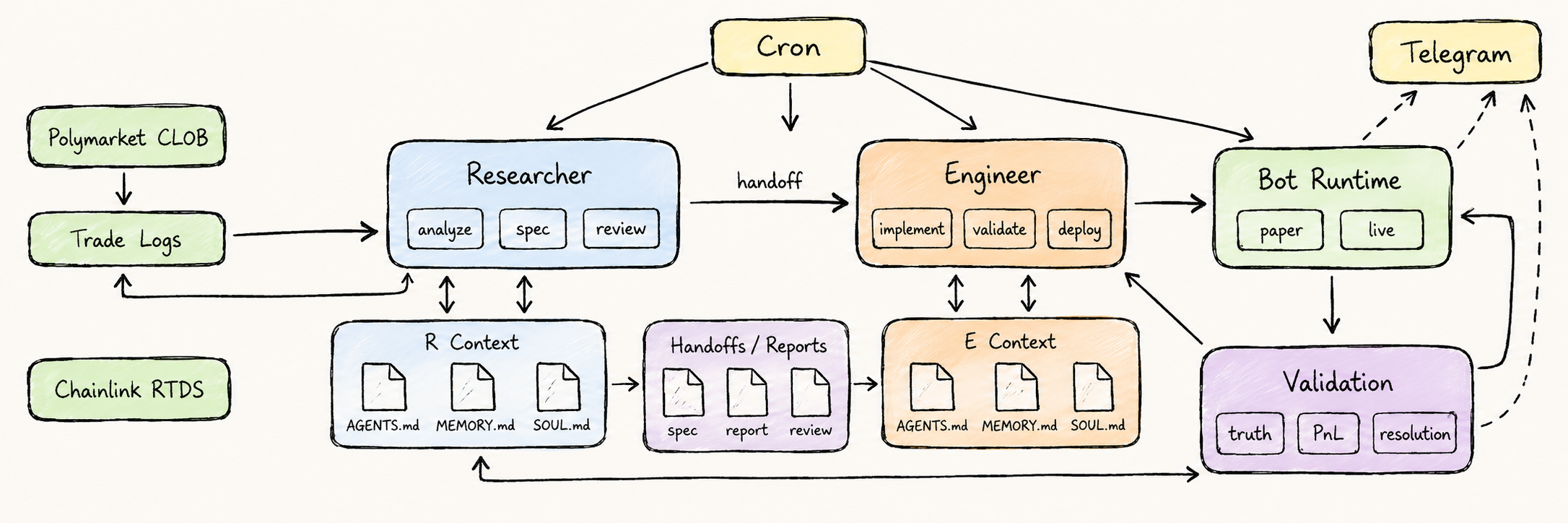
Over 6 months, I built an autonomous multi-agent trading research system for Polymarket.
The system used a researcher + engineer architecture, file-based memory, structured handoffs, Chainlink integration, and validation / reconciliation layers to test whether the strategy was real or just badly measured.
The conclusion was honest: the bot did not find durable retail edge in 5-minute crypto markets. The valuable output was the architecture and operating discipline that made that conclusion trustworthy.
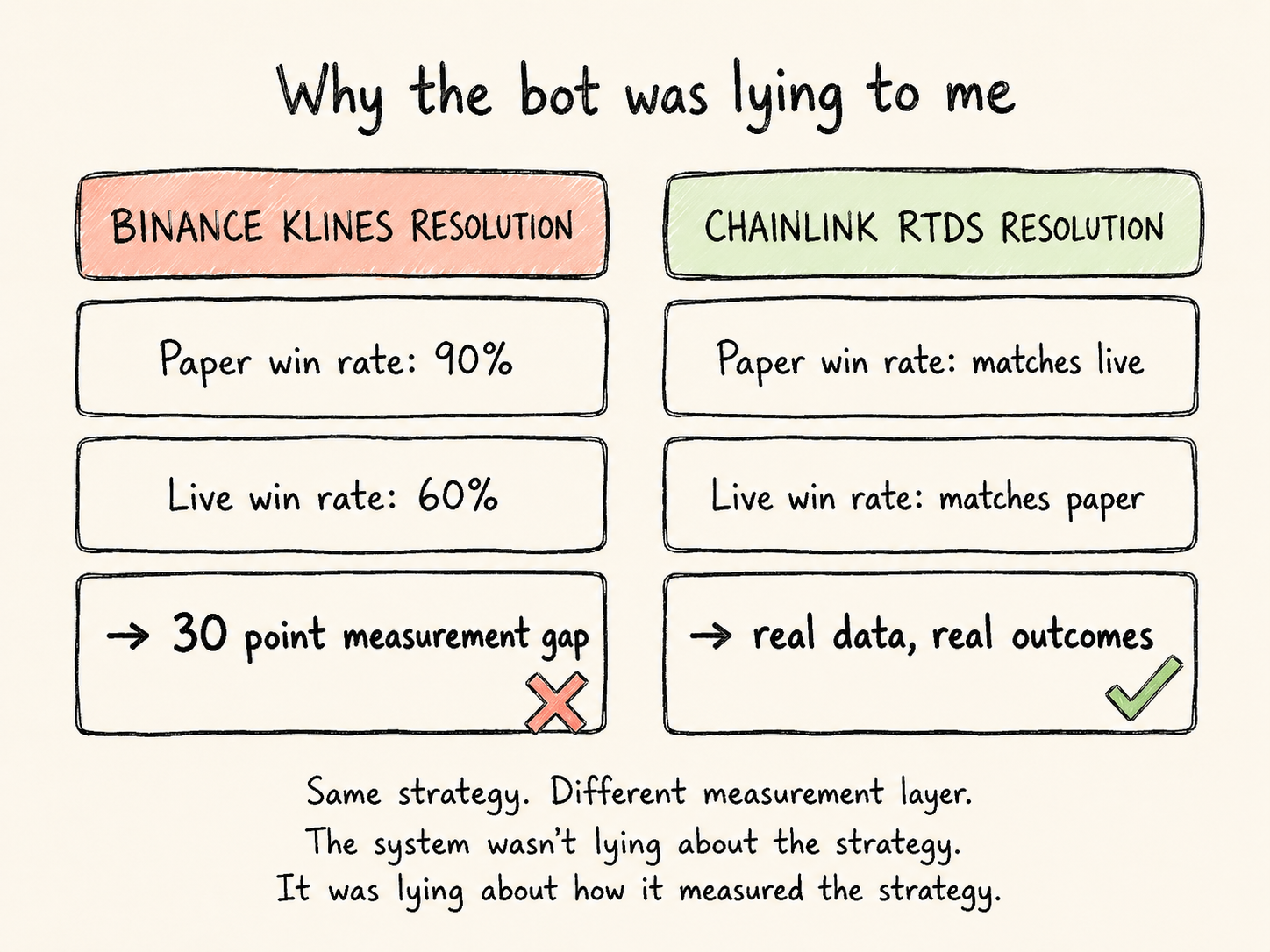
One example of the work: the system initially reported 90% accuracy. After rebuilding the measurement layer, the real figure was closer to 60%.
How I work
We identify where time, context, or decision quality is currently leaking so the project solves a real problem.
Sometimes that means a simple script. Sometimes it means a more structured AI system. The scope should match the job.
I connect the system to the real tools, data, and surfaces the work actually depends on, not a demo environment.
The output has to be trustworthy, understandable, and usable by you after delivery. Includes 30 days of post-launch support.
Pricing
Enough transparency to qualify the conversation, without pretending every project fits one fixed box.
From £750
Discovery, workflow diagnosis, and a written implementation roadmap for the highest-value next step.
Typically £1.5k–£5k
Build, integration, testing, handover, and support sized to the complexity of the system.
Typical ongoing costs are low and paid directly by the client: hosting is usually modest, and API spend depends on usage.
Contact
I work with small operators who need serious systems, not demos.